
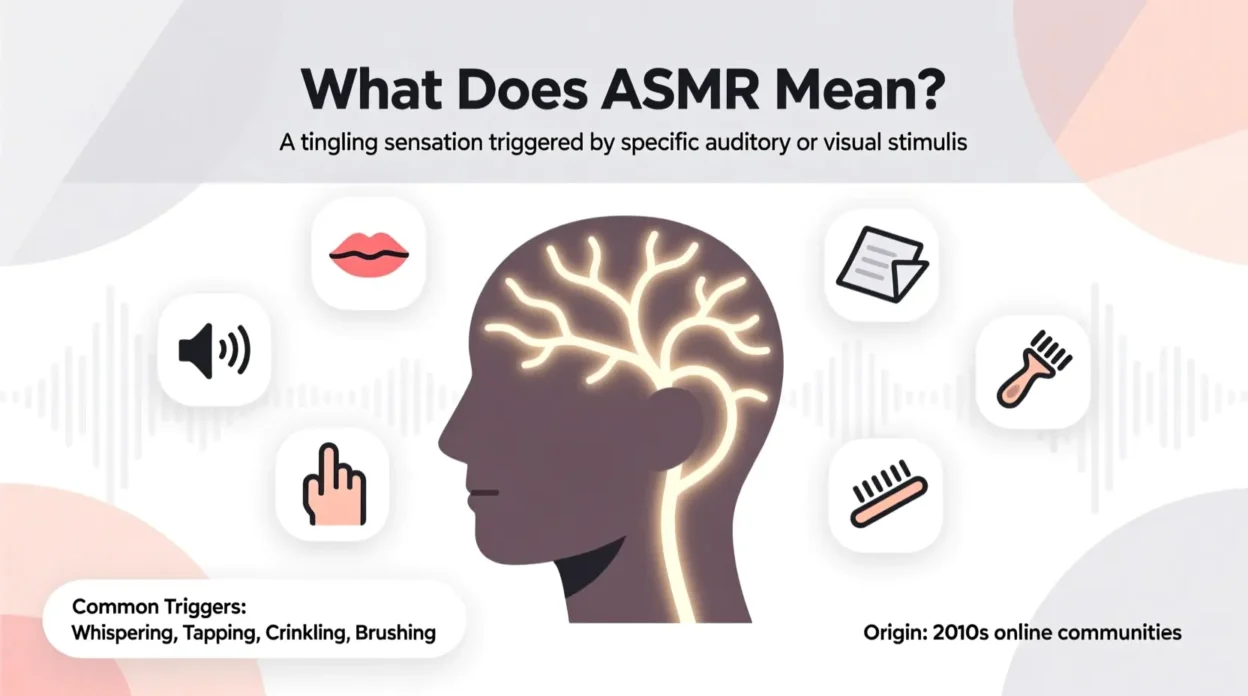
Have you ever scrolled through TikTok or YouTube and seen videos labeled “ASMR” and thought, “What on earth does that mean?” You’re not alone.
The first time I encountered it, I had no clue people were literally whispering, tapping, or crinkling objects just to make others feel relaxed. 😅
Quick Answer:
ASMR means “Autonomous Sensory Meridian Response.” It’s a friendly and relaxing term used to describe a tingling, calming sensation triggered by certain sounds or visuals.
🧠 What Does ASMR Mean in Text?
ASMR stands for Autonomous Sensory Meridian Response. Simply put, it’s that delightful tingly feeling some people get when they hear soothing sounds like whispering, tapping, or brushing.
Example:
- “Watching this ASMR video makes me so relaxed 😌”
In short: ASMR = Autonomous Sensory Meridian Response = a tingling, relaxing sensation triggered by sounds or visuals.
📱 Where Is ASMR Commonly Used?
ASMR is most commonly discussed on social media platforms and in casual chats. It’s casual and fun, never formal.
- 🎥 TikTok & YouTube: Most ASMR content lives here.
- 💬 Texting & Chats: People often recommend videos or describe their experiences.
- 🎧 Reddit & Forums: ASMR communities share tips, triggers, and favorite creators.
Tone:
Casual, relaxing, and social-media–friendly. Not for work emails or serious conversations.
💬 Examples of ASMR in Conversation
Here are some realistic texting examples:
A: “I can’t sleep 😩”
B: “Try this ASMR video, it helps me every night 😌”
A: “What’s ASMR?”
B: “It’s those relaxing sounds that give you tingles 😄”
A: “I found a new ASMR channel 🫶”
B: “Ooo send me the link pls 😍”
A: “ASMR is kinda weird ngl 😅”
B: “It’s weird but soooo relaxing lol”
A: “Listening to ASMR while studying helps a lot”
B: “Same, it keeps me calm and focused 🎧”
🕓 When to Use and When Not to Use ASMR
✅ When to Use:
- Chatting with friends about videos or relaxation
- Sharing study or sleep tips
- Casual social media posts
❌ When Not to Use:
- Professional emails
- Urgent or serious messages
- Formal discussions
Comparison Table:
| Context | Example Phrase | Why It Works |
|---|---|---|
| Friend Chat | “No rush, watch some ASMR 😄” | Casual & friendly |
| Work Chat | “Take your time on the report” | Polite & professional |
| “Please review the document” | Formal & clear |
🔄 Similar Slang Words or Alternatives
| Slang | Meaning | When to Use |
|---|---|---|
| Relax | Chill or calm down | Casual chats & texts |
| Vibing | Enjoying the mood or ambiance | Social media or friends |
| Chill ASMR | Relaxing ASMR content | Social media & casual chats |
| Sleep Sounds | Audio designed to help sleep | Study, bedtime, or relaxation |
❓ FAQs:
Q1: Can everyone experience ASMR?
A: Not everyone feels the tingling sensation, but most find ASMR relaxing anyway.
Q2: Is ASMR appropriate in work messages?
A: No, it’s casual and best reserved for friends or social media.
Q3: Can ASMR help with sleep?
A: Yes, many people use ASMR videos or sounds to relax before bedtime.
Q4: Is ASMR the same as meditation?
A: Not exactly. ASMR triggers tingles through sound/visuals, while meditation focuses on mindfulness and breathing.
✅ Conclusion:
ASMR, or Autonomous Sensory Meridian Response, is a fun, casual term used to describe the relaxing tingles some people feel from certain sounds or videos.
Perfect for chats, TikTok, YouTube, or sharing with friends, it’s never meant for formal settings.
Understanding ASMR can help you join conversations, recommend videos, or simply enjoy some much-needed relaxation.
So next time you see “ASMR,” you’ll know it’s all about tingles, calm vibes, and chill moments. 😌🎧