
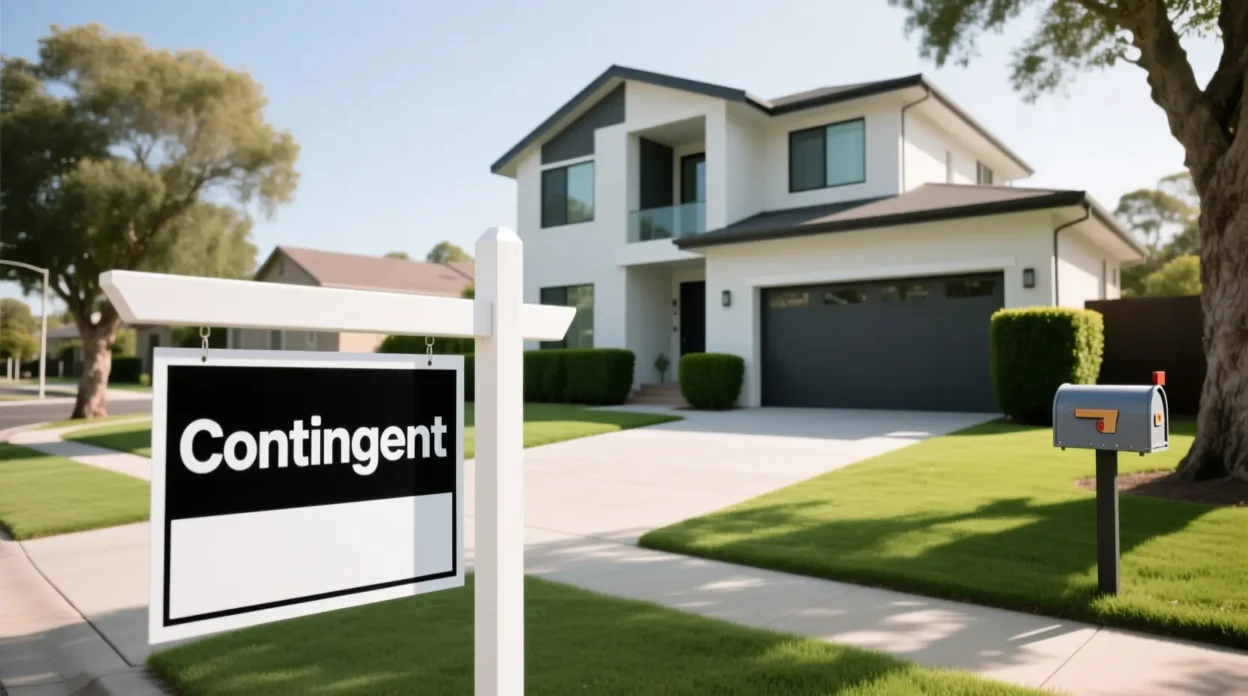
If you’ve ever browsed property listings online, you’ve probably seen a house you loved… only to notice a confusing little label next to it: “Contingent.”
The first time I saw it, I remember thinking, “Is it sold? Is it still available? Should I move on or call the agent?” 😅
If you’ve had the same moment of confusion — you’re not alone.
Here’s the quick answer 👇
Quick Answer:
“Contingent” in real estate means a seller has accepted an offer, but the sale isn’t final yet. It’s a conditional, in-process, and still-negotiable stage — meaning the deal is pending certain requirements.
Let’s break it down simply and clearly.
🧠 What Does Contingent Mean in Real Estate?
In real estate, “contingent” means:
➡️ The seller has accepted a buyer’s offer,
but
➡️ The sale will only move forward if certain conditions (contingencies) are met.
These conditions can include:
- Inspection contingency
- Appraisal contingency
- Financing contingency
- Home sale contingency
- Title contingency
Example sentence:
“The property is listed as contingent because the buyer’s loan approval is still pending.”
In short:
Contingent = Offer accepted + Conditions remaining = Deal not final yet.
📱 Where Is “Contingent” Commonly Used?
You’ll mostly see the term “contingent” in:
- 🏡 Zillow, Realtor.com, Redfin listings
- 🧾 Real estate contracts
- 📞 Conversations with agents
- 📝 MLS (Multiple Listing Service) statuses
- 💬 WhatsApp/SMS chats between buyers and agents
Formality level:
✔️ Professional
✔️ Contract-based
✔️ Used in real estate communication
✖️ Not a slang term
✖️ Not casual or social-media style
💬 Examples of “Contingent” in Conversation
Here are realistic, short, modern chat-style examples:
1.
A: found a great house! but it says contingent 😕
B: means someone made an offer but it’s not final yet. you can still ask your agent.
2.
A: is the maple st house available?
B: contingent rn, but you can submit a backup offer.
3.
A: why do so many listings say contingent??
B: market’s hot 😭 deals move fast.
4.
A: the house is contingent. should i keep looking?
B: yeah, but keep this one bookmarked just in case.
5.
A: does contingent mean sold?
B: nope! still in progress. deal isn’t locked.
6.
A: agent said it’s contingent on financing. what’s that mean?
B: buyer still needs loan approval.
7.
A: can we still tour a contingent property?
B: usually yes 👍 depends on the seller.
🕓 When to Use and When Not to Use “Contingent”
✅ When to Use “Contingent”
- When describing a home that has accepted an offer but isn’t closed
- When explaining real estate status updates
- When identifying what conditions must be satisfied
- When discussing backup offers
- When talking about buyer protections
❌ When NOT to Use “Contingent”
- When the sale is already final (closed)
- When there is no accepted offer
- When the property is in active negotiation
- When the home is marked pending (a later stage)
- In casual texting unrelated to real estate
Comparison Table
| Context | Example Phrase | Why It Works |
|---|---|---|
| Buyer–Agent Chat | “It’s contingent on inspection results.” | Shows condition-based status |
| MLS Listing | “Status: Contingent – accepting backup offers.” | Provides clarity for buyers |
| Real Estate Email | “The contract is now contingent upon financing approval.” | Professional and formal |
| Casual Chat | “It’s contingent but still has a chance!” | Easy-to-understand explanation |
🔄 Similar Real Estate Terms or Alternatives
| Term | Meaning | When to Use |
|---|---|---|
| Pending | All contingencies cleared; deal near closing | When sale is almost final |
| Active | Home is fully available | Before any offer is accepted |
| Under Contract | Seller accepted an offer; stages vary | Early-to-mid process |
| Backup Offer | Secondary offer waiting in line | When you still want the house |
| Offer Accepted | Agreement reached between seller and buyer | Start of process before contingencies |
| Closed/Sold | Sale fully completed | End of the transaction |
❓ FAQs:
1. Does contingent mean the house is sold?
No. It only means the seller has accepted an offer, but conditions must be met first.
2. Can I still make an offer on a contingent property?
Yes! Many sellers accept backup offers.
3. What’s the difference between contingent and pending?
- Contingent: Conditions still unmet
- Pending: Conditions cleared and closing is near
4. How long does a contingent home stay contingent?
Usually 1–6 weeks, depending on inspections, financing, and paperwork.
5. Can a contingent offer fall through?
Yes — deals often fail due to inspections, financing, or appraisal issues.
6. Is “contingent” good or bad for buyers?
It’s neutral — it protects the buyer and gives them time to verify everything.
7. Should I keep watching a contingent home I love?
Absolutely! Many contingent deals don’t close, so yours might become next in line.
🏁 Conclusion:
Understanding what “contingent” means in real estate helps you make smarter decisions when browsing listings or working with an agent.
A “contingent” home isn’t sold — it’s simply in a conditional phase where the buyer and seller must complete certain steps before the deal becomes final.
Whether you’re planning to submit a backup offer or just trying to decode listing statuses, knowing this term gives you a major advantage in the home-buying process.
Keep exploring, stay patient, and don’t hesitate to keep contingent homes on your watchlist — the right opportunity might open up anytime!