
Have you ever been scrolling through Twitter or watching the news when suddenly you see a headline that says someone has been “indicted”—and you pause, wondering, “Wait… what does that actually mean?”
You’re not alone. A lot of people see this word in legal news, political updates, or viral posts but still feel unsure about its real meaning. The word sounds serious, dramatic, and a bit confusing if you’re not familiar with legal terms.
So let’s clear it up in simple, everyday language.
Quick Answer:
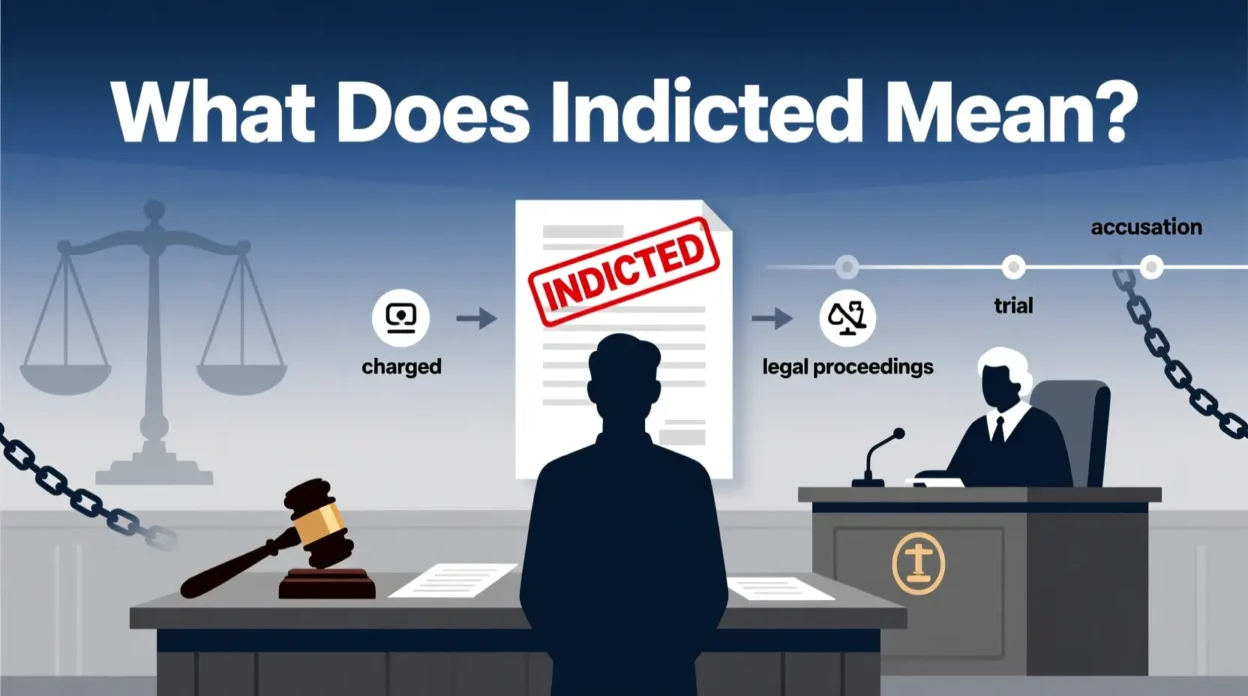
Indicted means “formally charged with a crime by a grand jury.” It’s a serious and legal term—not slang—and it refers to someone being officially accused of a criminal offense.
🧠 What Does Indicted Mean in Text?
In simple terms, “indicted” means that a grand jury has reviewed evidence and decided there is enough to formally charge a person with a crime. It does not mean the person is guilty—only that the legal process is officially beginning.
Short Example:
“After reviewing the case, the politician was indicted on multiple charges.”
In short:
Indicted = Formally charged with a crime = A legal accusation, not a verdict.
📱 Where Is Indicted Commonly Used?
While “indicted” is not a slang word or casual texting expression, you’ll commonly see it:
- 📰 News headlines
- 📺 Reports about criminal cases
- 🗳️ Political discussions
- 📱 Twitter/X threads
- 💬 Serious conversations
- 📚 Legal documents or commentary
Tone:
❗ Formal
❗ Serious
❗ Not used in friendly or flirty chats
❗ Not slang
So if you see “indicted” in text, it usually means someone is talking about an official legal matter.
💬 Examples of Indicted in Conversation
Here are realistic chat examples to help you understand how it appears in real conversations (mostly news-related, not casual texting):
1
A: bro did you see the news?
B: yeah he just got indicted 😳
2
A: what does indicted even mean lol
B: it’s like officially being charged w a crime
3
A: the headline said she was indicted. is that the same as guilty?
B: no it just means charges were filed
4
A: why is everyone tweeting about an indictment today
B: some politician got indicted again 💀
5
A: i thought indicted meant arrested
B: nah they’re different. indictment = charges, arrest = taken into custody
6
A: so he can still run for office even if indicted??
B: yup apparently
7
A: he was indicted?? what happened
B: grand jury found enough evidence
🕓 When to Use and When Not to Use Indicted
✅ When to Use “Indicted”
Use it when you’re talking about:
- Legal cases
- News stories
- Court updates
- Official criminal charges
- Serious discussions
❌ When Not to Use “Indicted”
Never use it in:
- Casual texting
- Jokes or flirty chats
- Work chats unless discussing law
- Friendly conversations
- Emails (unless legal-related)
⚖️ Comparison Table
| Context | Example Phrase | Why It Works |
|---|---|---|
| Friend Chat | “did you hear he got indicted today?” | It works because it’s a serious news update |
| Work Chat | “the client was indicted yesterday according to the report” | Only relevant in legal/business contexts |
| “The defendant was indicted on federal charges.” | Formal, professional, and clear | |
| Casual Chat | “lol you’re indicted” | ❌ Doesn’t work — wrong usage & tone |
🔄 Similar Slang Words or Alternatives
While indicted is not slang, here are related legal terms people mix it up with:
| Term | Meaning | When to Use |
|---|---|---|
| Charged | Accused of a crime | General legal conversations |
| Arrested | Taken into police custody | Breaking news or crime updates |
| Convicted | Found guilty after trial | Talking about final verdicts |
| Accused | Someone is claimed to have committed a crime | Before official charges |
| Sentenced | Punishment decided by the court | After conviction |
| Prosecuted | Legal action taken against someone | Formal legal discussions |
❓ FAQs:
1. Does “indicted” mean someone is guilty?
No. It only means they have been formally charged, not convicted.
2. Can someone be indicted without being arrested?
Yes, it happens often. Arrest and indictment are different steps.
3. Who decides an indictment?
A grand jury reviews evidence and votes on whether to charge.
4. Is “indicted” a slang word?
Not at all. It’s a legal term, not used casually.
5. Can you be indicted for any crime?
Indictments are mostly for serious crimes, especially felonies.
6. What comes after an indictment?
Arraignment, court hearings, plea deals, or trial.
🔚 Conclusion:
“Indicted” is a serious legal term that means being formally charged with a crime, not being proven guilty.
If you see it in text or news, it usually signals an important update about a criminal case or political event.
Understanding the difference between being indicted, arrested, charged, or convicted helps you read headlines, follow legal stories, and avoid common misunderstandings.
Whether you’re browsing social media or watching breaking news, now you know exactly what “indicted” means and how it is used.