
You’re filling out a form, scrolling through comments, or reading a post when you suddenly see “N/A” and you pause.
Does it mean someone didn’t answer? Is it slang? Or is it something formal?
Don’t worry, you’re not alone. A lot of people see N/A for the first time and feel confused, especially when it pops up in texts, social media, or official documents. Let’s clear it up in simple words.
Quick Answer:
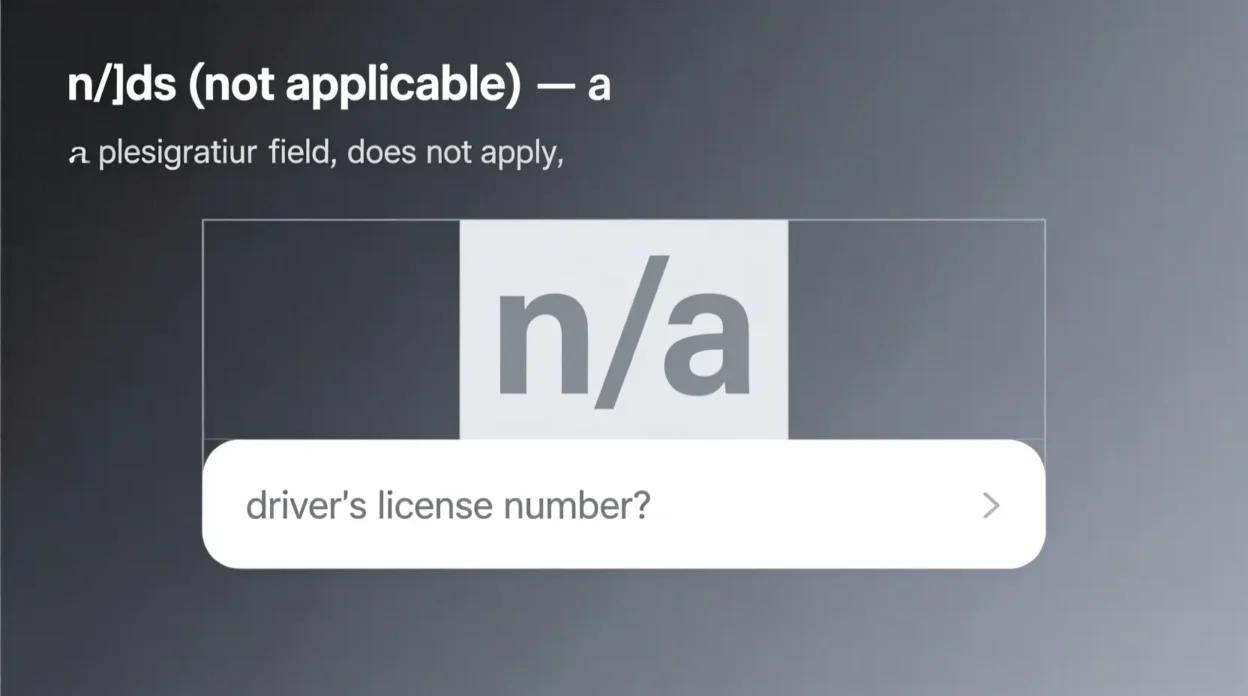
N/A means “Not Applicable.” It’s a neutral and practical way of saying “this doesn’t apply here” or “this question doesn’t fit this situation.”
🧠 What Does N/A Mean in Text?
N/A is short for Not Applicable.
It’s used when a question, option, or piece of information doesn’t relate to the current situation. Instead of leaving something blank, people write N/A to show that the item is intentionally skipped not forgotten.
Simple example:
“Do you have a driver’s license?”
Answer: N/A (if you’re too young or the question doesn’t apply)
In short:
N/A = Not Applicable = This doesn’t apply here.
📱 Where Is N/A Commonly Used?
You’ll see N–A almost everywhere both online and offline:
- 📄 Forms & documents (job applications, surveys)
- 💼 Work chats & reports
- 📊 Spreadsheets & data tables
- 💬 Texting & messaging (less common, but still used)
- 🌐 Websites & FAQs
Tone check:
- ✔️ Neutral
- ✔️ Professional
- ✔️ Clear
- ❌ Not flirty
- ❌ Not emotional
👉 N–A is more formal than slang, but it’s still widely understood in casual settings.
💬 Examples of N/A in Conversation
Here are some realistic chat-style examples to show how people actually use it:
Example 1
A: “What’s your middle name?”
B: “n-a, i don’t have one 😅”
Example 2
A: “Any allergies?”
B: “N-A”
Example 3
A: “What time did you clock out yesterday?”
B: “n/a i was off”
Example 4
A: “Car registration number?”
B: “N-A (don’t own a car)”
Example 5
A: “Why didn’t you attend the meeting?”
B: “n/a, wasn’t invited”
Example 6
A: “Favorite ex?”
B: “lol n-a 😂”
🕓 When to Use and When Not to Use N/A
Knowing when to use N–A matters, especially in professional settings.
✅ When to Use N/A
- When a question doesn’t apply to you
- In forms, surveys, or applications
- In work reports or spreadsheets
- When clarity is more important than emotion
❌ When Not to Use N/A
- In emotional or sensitive conversations
- When someone expects a personal answer
- In creative or storytelling content
- When a full explanation is needed
📊 Context Comparison Table
| Context | Example Phrase | Why It Works |
| Friend Chat | “n/a 😄” | Casual and understood |
| Work Chat | “N/A” | Clear and professional |
| “Not applicable in this case.” | Formal and polite | |
| Form | “N/A” | Standard and accepted |
🔄 Similar Slang Words or Alternatives
Here are some alternatives to N–A, depending on tone and situation:
| Slang / Term | Meaning | When to Use |
| Not Applicable | Same as N/A | Formal writing |
| None | No value exists | Simple answers |
| Doesn’t apply | Informal explanation | Casual chats |
| Blank | Left empty | Forms (not recommended) |
| Not relevant | Not related | Work discussions |
👉 Pro tip: If clarity matters, write the full phrase “Not applicable” instead of N/A.
❓ FAQs:
❓ Is N/A slang?
Not really. N/A is an abbreviation, not slang. It’s formal but commonly used everywhere.
❓ Can I use N/A in texting?
Yes, but mostly for practical answers not emotional conversations.
❓ Does N/A mean “no”?
No. It means the question doesn’t apply, not that the answer is “no.”
❓ Is N/A rude?
Not at all. It’s neutral and polite when used correctly.
❓ Should I write N/A or n/a?
Both are understood, but N–A (capital letters) is more standard and professional.
✅ Final Thoughts:
So now you know N–A simply means “Not Applicable.” It’s a clear, neutral way to say “this doesn’t fit my situation.”
You’ll see it in forms, work chats, data tables, and even casual messages when people want to keep things short and simple.
If you’re unsure whether to use it, ask yourself one question:
👉 Does this question apply to me?
If the answer is no, N-A is perfect.
Keep this one in your vocabulary, and you’ll never feel confused when you see it again 👍